
Neurodiversity, Modern Stress and the Nervous System
Understanding Nervous System Overload in Children
At Proactive Chiropractic Care, we are seeing more families seeking support for children and adolescents who are not necessarily in pain, but who appear to be struggling with nervous system overload. This can look like difficulty settling, sensory sensitivity, heightened stress responses, disrupted sleep, or challenges with emotional and physical regulation.
Some of these children identify as neurodivergent, while others do not, yet are navigating the pressures of modern life. Busy schedules, constant stimulation, increased screen time, and reduced opportunities for rest all place additional demands on developing nervous systems. While these experiences may look different from the outside, we often notice shared patterns of nervous system stress and reduced adaptability.
Rather than focusing on diagnoses or labels, our approach centres on how the nervous system is functioning and how it responds to the environment.
Neurodiversity and Nervous System Regulation
Neurodiversity recognises that brains naturally process information and respond to sensory input in different ways. This includes, but is not limited to, autism spectrum differences, attention and regulation challenges, sensory sensitivities, and heightened stress responses.
Alongside this, many children without a formal diagnosis are experiencing high levels of nervous system stress. School demands, technology use, sleep disruption, and ongoing stimulation can all influence how efficiently the nervous system regulates itself. What we commonly see across these various presentations is not a single condition, but a nervous system that is working hard to keep up with its environment and all the external pressures our young people face in today’s world.
The Autonomic Nervous System: Finding Balance
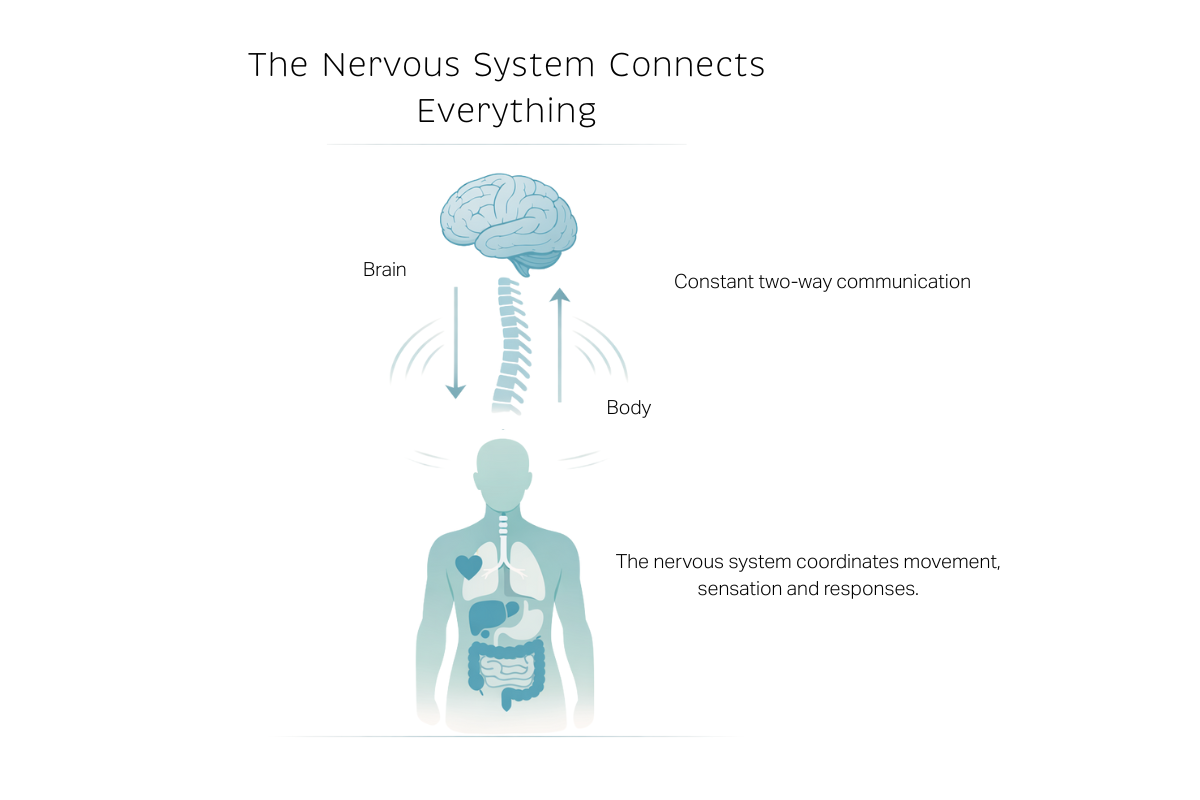
The autonomic nervous system plays a key role in how we respond to daily life. It has two main components that work together. The sympathetic nervous system supports alertness, focus, and action. It helps us respond to challenges and demands. The parasympathetic nervous system supports rest, recovery, digestion, and calming.
In a nervous system that is regulated and working as it should, there is flexibility. The body can become alert when needed and then settle again afterwards. When the nervous system is under ongoing stress, this balance can become harder to access. The system may stay in a heightened state for longer periods, making it more difficult to relax, recover, or regulate emotions and attention. This is not a behavioural issue or out of choice. It reflects how the nervous system is responding to ongoing input and stimuli.
Overstimulation and the Noise of Modern Life
Many nervous systems today, both young and old, are exposed to near constant stimulation. Screens, notifications, academic or work pressure, social demands, and reduced downtime can create a background level of sensory input that rarely switches off. For some children, especially those with more sensitive nervous systems, this can make it harder to filter and process information. Over time, this may contribute to feelings of overwhelm, reactivity, or difficulty settling. These responses are not about effort or motivation, they are about capacity.

Chiropractic Care and Nervous System Function
Modern chiropractic care places strong emphasis on spinal movement and its relationship with the nervous system. Research in this area, including work by chiropractor and neuroscientist Dr Heidi Haavik, explores how sensory input from the spine can influence brain and nervous system activity. (Science Direct)
Current research suggests chiropractic care may influence brain processing, sensorimotor integration, and the way the brain responds to sensory information from the body. This research focuses on understanding neurophysiological responses (MDPI) and while it does not provide evidence for the treatment of neurodevelopmental or mental health conditions, what it does offer is insight into how closely spinal function and nervous system regulation are connected.
What We Often Hear from Families
Like with many presentations and conditions we see; outcomes to chiropractic care can vary. That said, many families tell us they notice subjective changes over time such as a greater perceived ability to settle, improved sleep patterns, reduced physical tension, or increased body awareness. These are observations rather than guarantees, but are ones we are incredibly excited by. They reflect trends we are seeing in practice and align with a nervous system centred approach that prioritises regulation, adaptability, and function.
By focusing on nervous system regulation rather than labels or symptoms, we aim to support greater resilience and adaptability. Our approach is not about changing who someone is. It is about creating the conditions that allow the nervous system to function as efficiently as possible in a busy, highly stimulated world.

To Conclude
At Proactive Chiropractic Care, our focus is on supporting spinal function and nervous system communication as part of a broader wellbeing approach. We see our role as complementary and collaborative, working alongside families, healthcare providers, and allied professionals where appropriate. Our team are all trained and experienced in treating infants, children and teenagers.